Main Panel Upgrade with Permits in Los Angeles — A Real Job Walkthrough
A full overhead service and main panel upgrade from 100A to 200A in Los Angeles — LADWP meter approval, LADBS permit, meter lock removal, install day, and city inspection. Here's the real timeline and everything you need to know before you start.
By Cesar R.
50
35
Introduction
Main panel upgrades are one of the most impactful electrical improvements a homeowner can make — more capacity, safer wiring, and the ability to add EV chargers, solar, or heavy appliances without overloading the system. But in Los Angeles, a panel upgrade isn't a one-week job. Between LADWP approvals, LADBS permits, meter lock removal, and the install itself, the full process typically takes 6–10 weeks from first call to inspection sign-off. This post breaks down each step using a real 100A-to-200A overhead service upgrade we completed in Los Angeles.
The Property and the Problem
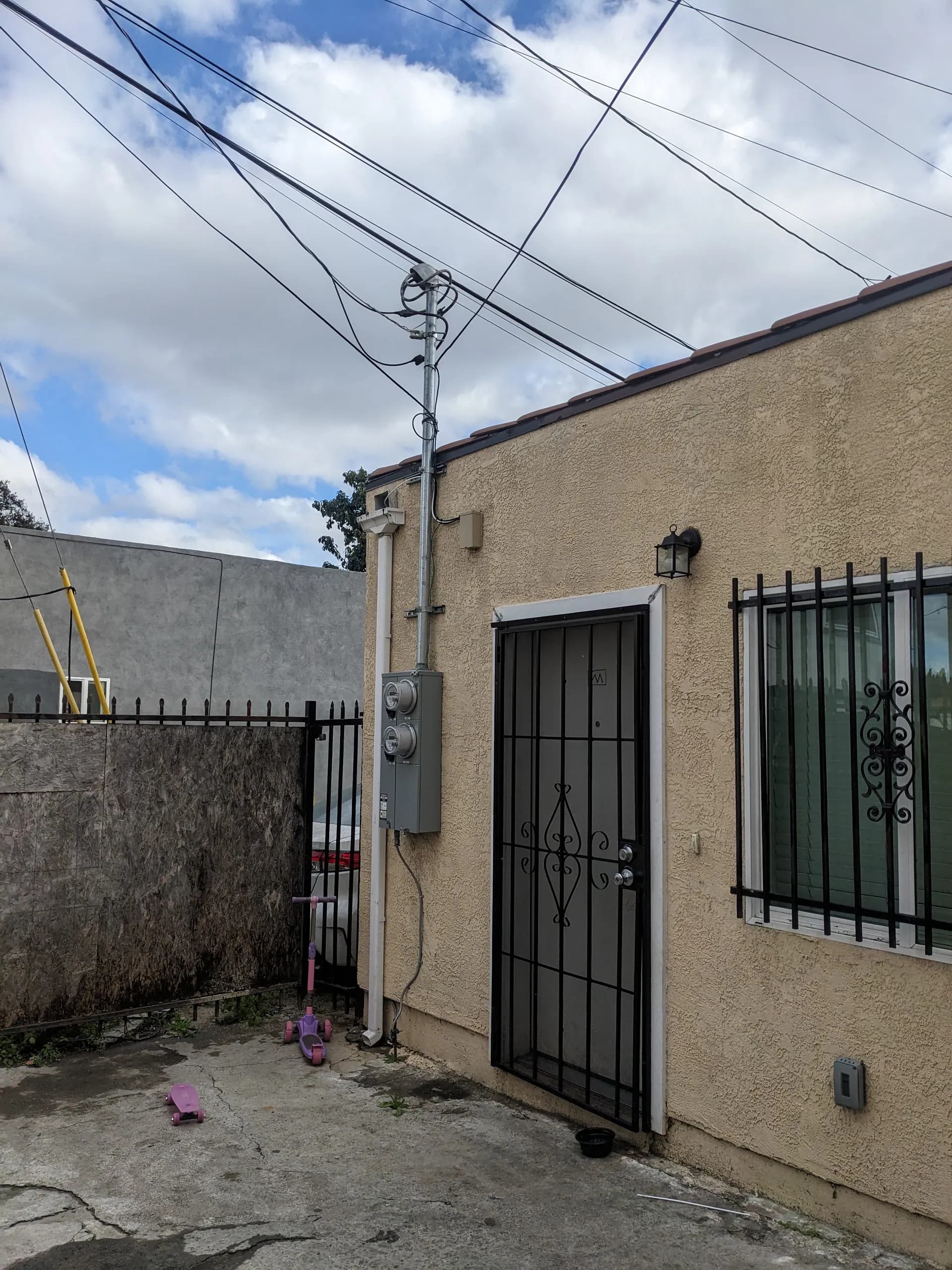
The homeowner had an older 100-amp panel at full capacity. They wanted to add an EV charger and a mini-split, but there simply wasn't room. The overhead service entrance — the wires running from the utility pole to the meter — also needed to be brought up to current code as part of the upgrade, which meant coordinating with LADWP for a service disconnect on install day.
The Full Timeline — What to Expect Before Work Even Starts
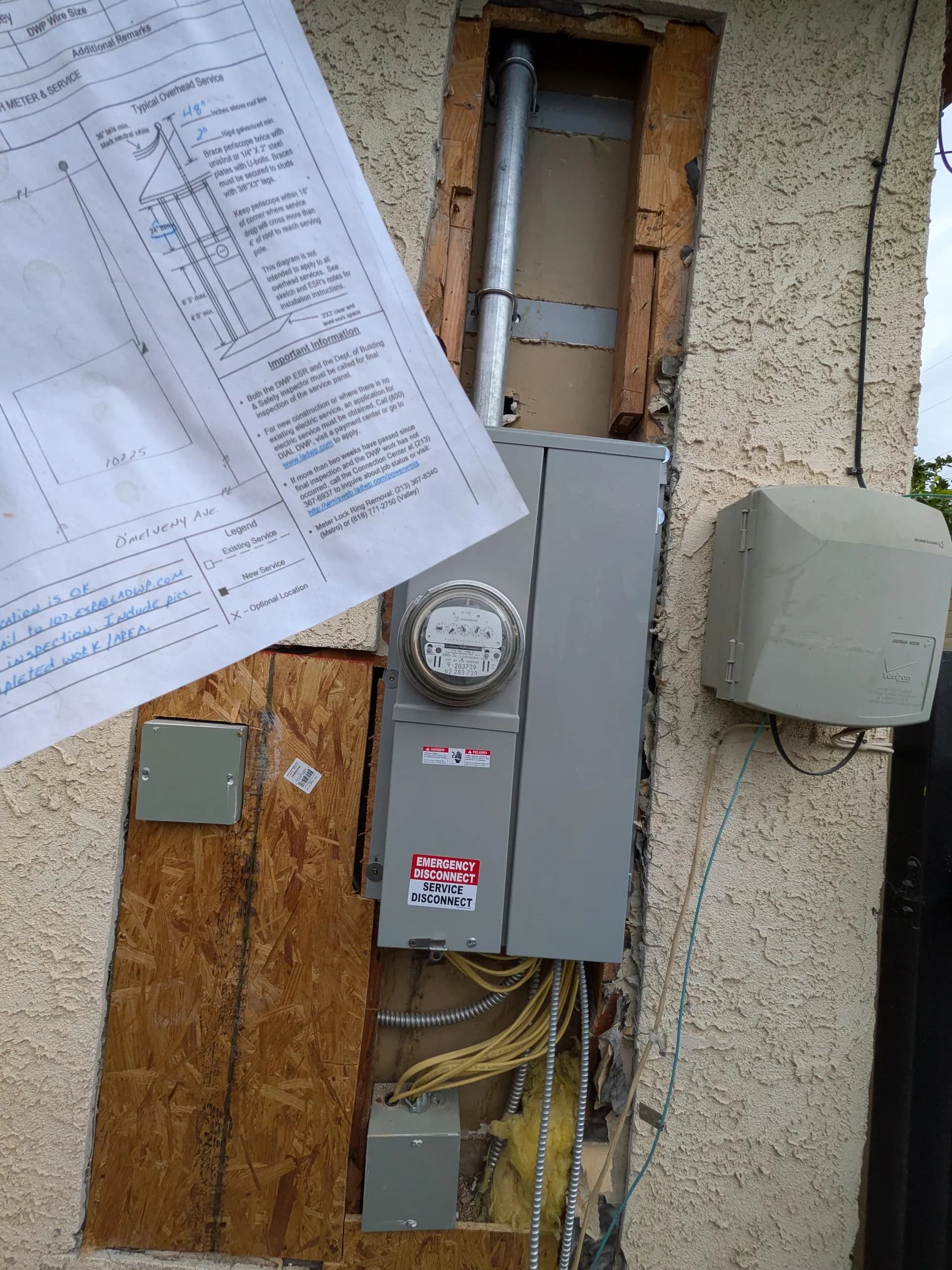
- LADWP meter spot approval (~4 weeks): Before we can pull a permit, LADWP must approve the new meter socket location and provide their requirements — clearances, conduit routing, weatherhead height, etc. We submit this request and wait. It typically takes about a month. Once approved, we receive their specifications that we must follow exactly.
- LADBS electrical permit (~2 weeks): Once we have the LADWP requirements, we submit the electrical permit application through the LADBS (Los Angeles Department of Building and Safety) online portal. The application itself takes about a week to prepare properly with a load calculation. Processing takes another week. The approved permit card must be posted at the job site during work.
- Meter lock removal order (~2 weeks): LADWP places a lock on the meter socket that must be officially removed before we can do any work. We submit the removal request and it takes approximately two weeks for LADWP to schedule and complete it.
- Prep day (1 day): The day before the install, we do a site walkthrough, confirm all materials are on hand, and prep anything that can be done without power off — conduit runs, mounting hardware, panel positioning.
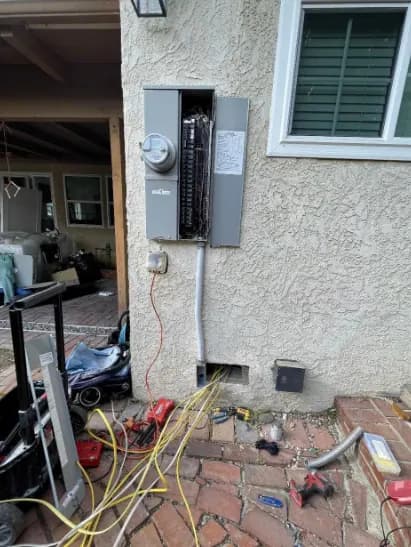
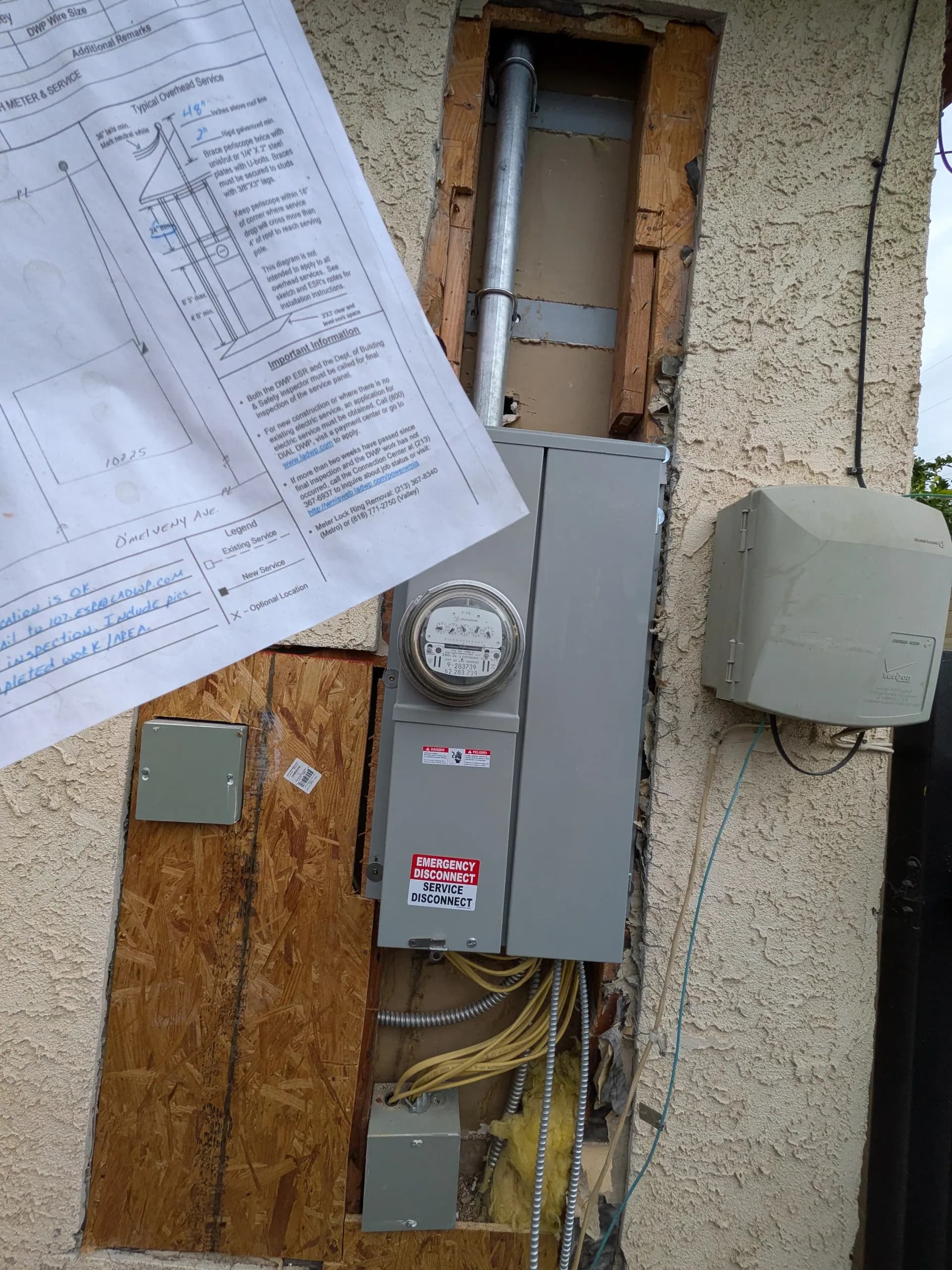
- Install day (1 day): LADWP disconnects power at the scheduled time (typically early morning). We remove the old meter socket, weatherhead, and panel; install the new 200A equipment; re-land all circuits; install the new grounding electrode system; and restore power through LADWP by end of day.
- Final inspection (LADBS, timing varies): After work is complete, we schedule a final inspection with LADBS. The inspector checks bonding, grounding, wire gauge, weatherhead, and panel labeling. Timeline varies by city workload — typically a few days to two weeks after we call for it.
Shopping for Parts
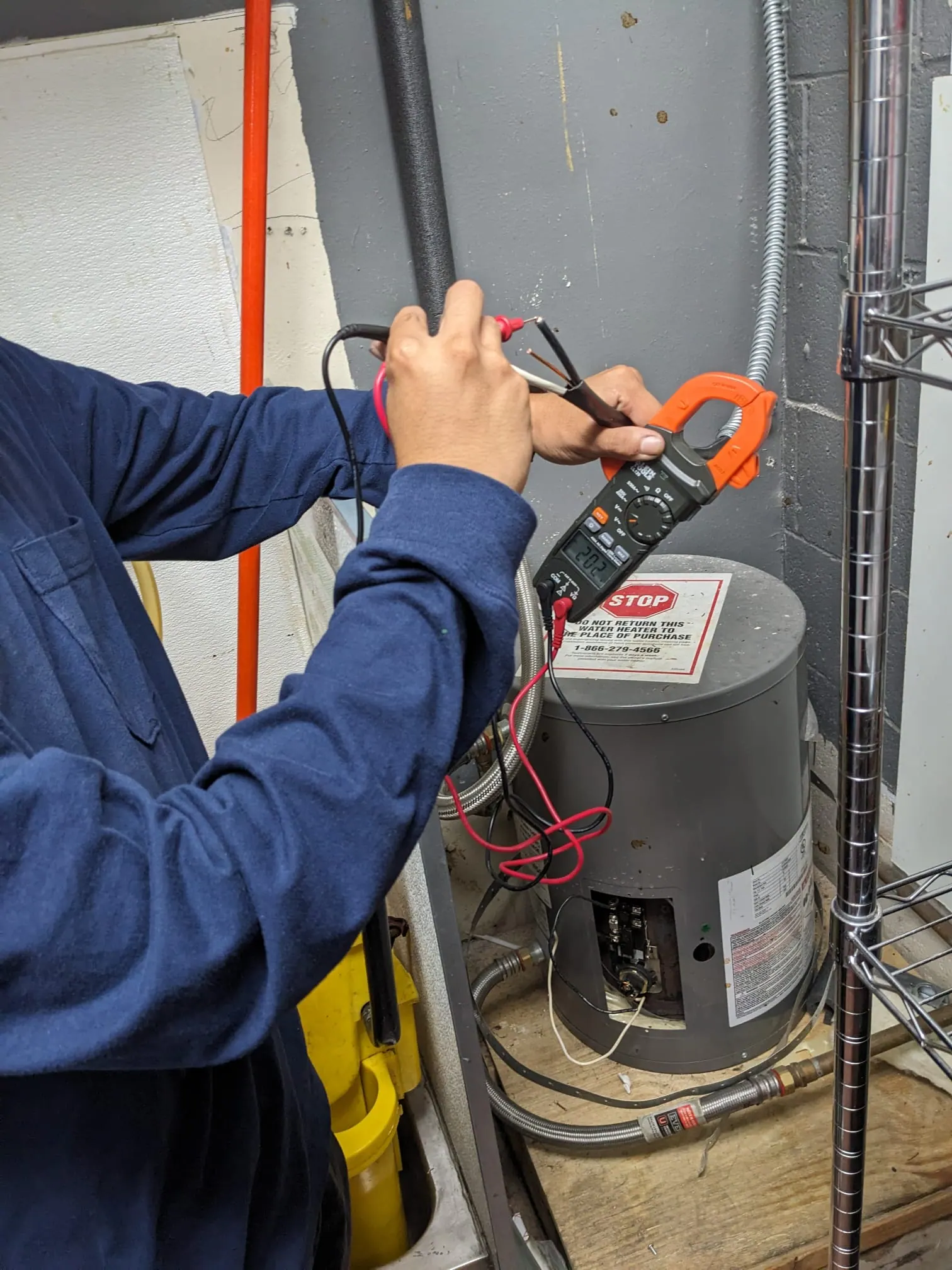
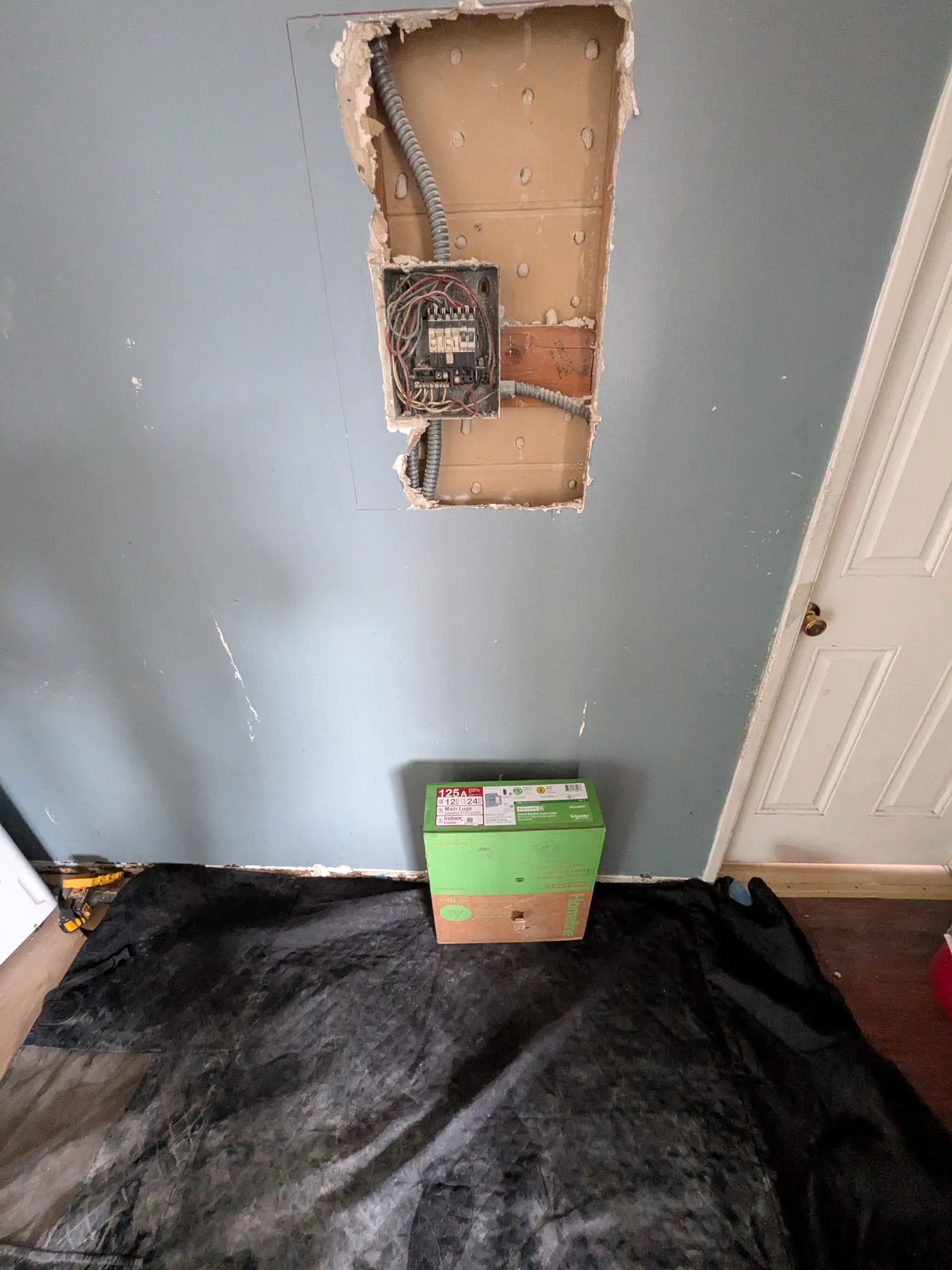
Before install day, we sourced everything: a new 200A main breaker panel (Square D QO or equivalent), 2/0 AWG aluminum service entrance cable, a new weatherhead, meter socket, ground rods, bonding hardware, and breakers matching the homeowner's existing circuits. Getting materials right the first time means no second trip and no delay on install day.
Need a licensed electrician in Los Angeles?
RnR Electrician handles this and more. Same-day service, free estimates.
The Install Day
- LADWP disconnects power to the meter at the scheduled time — typically early morning.
- Remove old meter socket, weatherhead, and 100A panel. Document all existing circuit wiring before removal.
- Mount new 200A panel and meter socket per LADWP-approved layout. Run new service entrance cable from weatherhead through meter socket to panel.
- Re-land all existing circuits into the new panel with proper labeling.
- Install new grounding electrode system — two ground rods bonded together, connected to neutral bus.
- LADWP restores power, we test all circuits and verify GFCI/AFCI breakers are functioning.
- Post permit card and call LADBS for final inspection.
The City Inspection
The LADBS inspector checked the panel for proper bonding, verified the ground rod installation, confirmed the service entrance wiring gauge matched the panel rating, and verified breaker labeling. The job passed on the first visit — which is the standard when the work is done right. The homeowner received their final permit sign-off, which is important for home sales, insurance, and legal protection. It's worth noting that requirements and timelines vary between cities and power departments — what applies in the City of Los Angeles may differ from Pasadena, Burbank, or Glendale, each of which has its own utility and inspection process.
Rental Properties, RSO, and the Tenant Habitability Program
If the property is a rental unit — especially a multi-unit building covered by the Los Angeles Rent Stabilization Ordinance (RSO) — there is an additional layer: the Tenant Habitability Program (THP). Before beginning any work that temporarily displaces tenants or affects habitability (which a panel upgrade and power outage does), the landlord must submit a THP application to the Los Angeles Housing Department (LAHD). The THP review process can take anywhere from 1 to 3 months, depending on tenant cooperation and the complexity of the situation. Tenants have rights to review, object, and negotiate the terms of temporary displacement. If tenants don't cooperate or contest the application, the timeline extends significantly. We assist landlords through this process and provide temporary energy solutions — battery banks that can power essential devices and lighting during the outage period. In some cases, tenants request hotel accommodations instead, which is handled on a project-by-project basis. Critically: LAHD has the authority to halt the entire upgrade even if a valid LADBS permit has been issued. A permit from the building department does not override LAHD's jurisdiction over tenant habitability. We always recommend starting the THP application as early as possible — ideally in parallel with the LADWP meter spot request — so it doesn't become the bottleneck.
Emergency Situations: A Different Set of Rules
It's worth noting that emergency electrical failures operate under different rules. If the power goes out unexpectedly due to weather, grid overload, or equipment failure, neither you nor the landlord needs a permit to restore service — emergency repairs to restore power are handled outside the standard permit process. However, the landlord is still legally required to restore basic utility services promptly as part of standard habitability law, regardless of how the failure happened. The THP process applies to planned, non-emergency work. An emergency doesn't trigger a THP requirement, but it also doesn't give the landlord a free pass on habitability obligations.
What the Homeowner Got
- 200A service capacity — doubled from 100A, with room to grow.
- Clean new panel with proper circuit labeling and space for future breakers.
- Full LADBS permit on record — no liability risk, transferable to future buyers.
- Ready for EV charger and mini-split installation on a follow-up visit.
- Updated weatherhead and meter socket meeting current NEC and LADWP standards.
How Much Does a Main Panel Upgrade Cost in LA?
Costs vary based on panel brand, number of circuits, overhead vs. underground service, and permit fees. In Los Angeles, a permitted 100A-to-200A overhead upgrade typically ranges from $2,500 to $4,500 for labor and materials combined. Permit fees add $200–$500 depending on the city. For rental properties with RSO coverage, factor in THP application costs and potential tenant accommodation. The investment is almost always worth it — an underpowered panel is a bottleneck for modern electrical needs and a potential insurance and liability issue.
Schedule Your Panel Upgrade
RnR Electrician handles main panel upgrades throughout Los Angeles, the San Fernando Valley, and the San Gabriel Valley. We manage the full process — LADWP coordination, LADBS permits, meter lock removal, and final inspection — so you're not chasing down city departments on your own. For rental properties, we guide you through the THP process and provide temporary power solutions during the outage. Call (626) 922-0091 or visit our contact page for a free estimate.
Need a licensed electrician in Los Angeles?
RnR Electrician handles this and more. Same-day service, free estimates.
A panel upgrade in LA isn't just one permit — it's LADWP approval, LADBS permitting, meter lock removal, the install, and a final inspection. We manage every step so you don't have to.
The actual electrical work takes one day. Getting everything approved and lined up takes 6–10 weeks. That's the reality of a proper permitted panel upgrade in Los Angeles — and it's worth doing right. If your panel is at capacity, you're planning to add an EV charger or solar, or you're a landlord with an aging service, call us for a free on-site estimate. We'll walk you through the full timeline for your specific property and jurisdiction.

Follow RnR Electrician on Google